
Book Review: Paper Girl, by Beth Macy
Beth Macy's latest book is part memoir, part reportage, and a powerful look at the hollowed-out core of America.

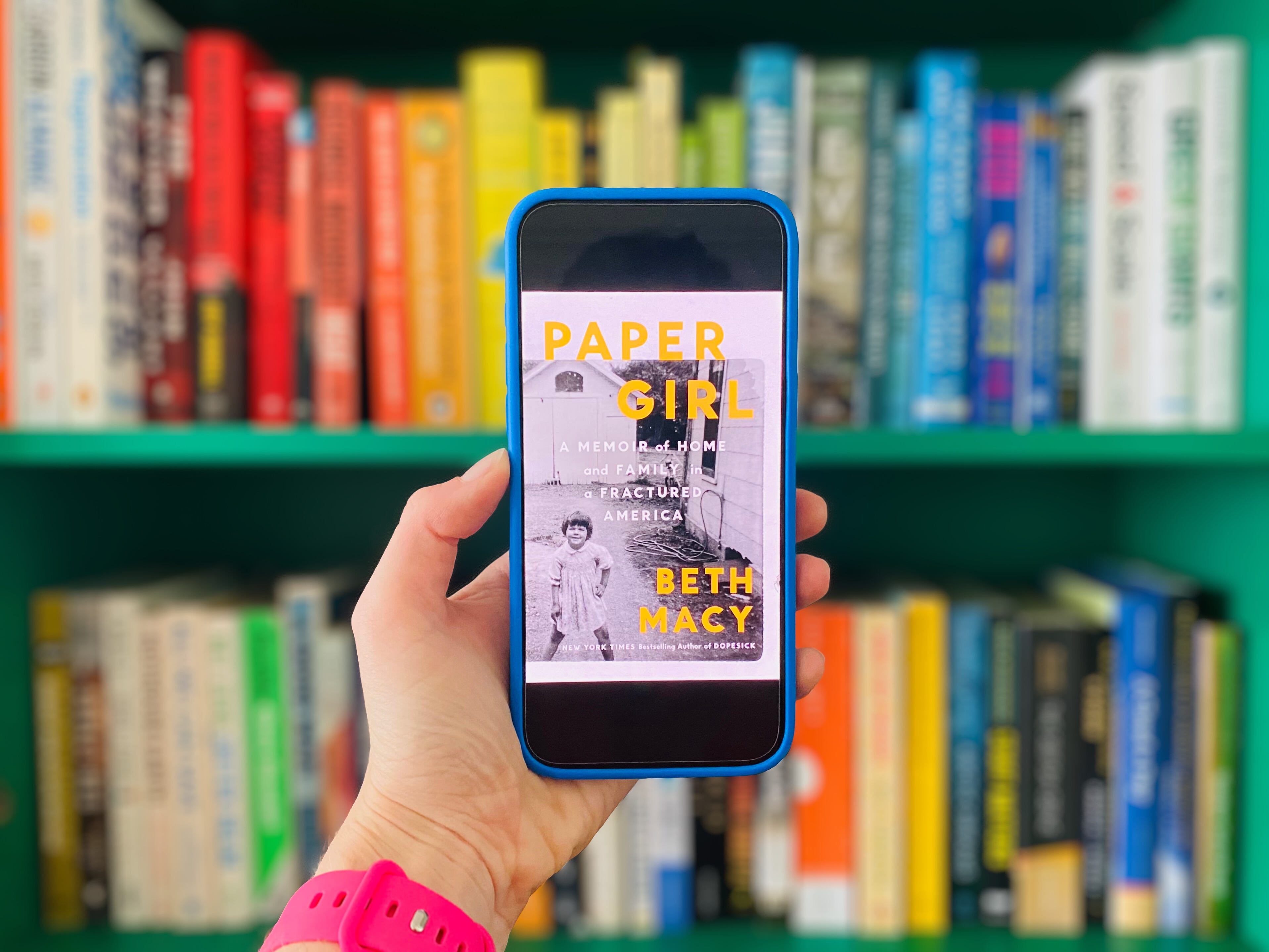
“After the jobs went away, heroin helped itself to my hometown, followed by fentanyl and meth” writes Beth Macy in Paper Girl. “The result of that one-two punch has been a preponderance of trauma that is overtaxing every system meant to address it.”
And just like that, we’re back in the American heartland.
I knew of Macy’s earlier book, Dopesick, but hadn’t encountered her until a recent Kara Swisher podcast where she spoke in depth about her experience growing up poor in Ohio, and what it’s like to attempt the same now.
That’s what makes this book work so well: it’s not just Macy’s own story of small-town poverty and a lucky escape, but a blend of both memoir and modern reporting. Macy’s story is contrasted with that of Silas, a young man in a situation not unlike Macy’s of forty years ago. To contrast their stories is to see — in essence — the same person, in the same town, but a whole new world.
Combine the opioid crisis with NAFTA and the decline of American manufacturing, the cutting of educational grants and programs, the stripping of school funding, the loss of local media, and you get a new world. Being poor in America in the 2020s is a new kind of low — it is not the poverty of the 1970s and 80s.
If Macy’s own story is one of upward mobility helped along by a government and institutions unthreatened by social progress and unafraid to invest in a smart person in tough circumstances, then the story of today’s youths (perhaps not Silas; it is too early to tell) is ultimately one of backward mobility.
“Had I been born just a decade later,” writes Macy, “I would not have been able to go to college.” I can’t help thinking of all the wasted talents, the future voices and leaders we will never hear from, because a generation of leaders were too callous and cowardly to make the necessary investments.
After devouring Timothy Snyder’s On Freedom last year, this book was an illuminating compliment, a reminder that true freedom requires a strong, capable government determined to lift people up rather than ‘get out of the way’. A thriving adult is the product of decades of investment from family, community, educators, medical experts, and governments. Nobody — truly, nobody — makes it to adulthood alone.
Education is a key theme in Paper Girl, billed frequently as the key to making it out — not just for the ideas, or the paper certificate, but more often than not, for the kindness and generosity of the teachers who help along the way. This is, of course, troubling in a world where educational institutions are all but propped up by a handful of matchsticks. “Homeschooling is now the fastest growing form of education in the United States,” Macy writes, and while some are proactive ideological attempts to shield children from all those dangerous woke mind viruses (measles, good, woke mind, bad), Macy revealed a key factor I hadn’t realised. In the post-COVID world especially, many homeschooling scenarios arise simply because the parents do not have the mental health to get up every morning and get their kids to school (let alone get themselves to work). The result is not, of course, homeschooling, but simply neglect. Perhaps I’m showing my naivety here, my early-2000s urban Australian class privilege, but I had not seriously considered the role of basic parental mental health in the equation.
Of course, the homeschooling epidemic is only just taking root, but the consequences of an insufficient education, an impoverished local news environment, and a toxic online swirl of misinformation has turned these once close-knit towns into more insular but less connected — and entirely misinformed — places. Macy explicitly calls out the clear correlation between deaths of despair and misinformation, a vicious cycle that breeds despair just thinking about. What haunts me most is the brief anecdote about Macy’s diabetic nephew, who refused a much-needed kidney transplant on the basis that the donor had received a COVID vaccine. That’s where we’ve gotten to.
These broader points are hardly new for anyone who has read a book in the last twenty years, but Macy can tell it with an intimacy and empathy that few can, because this is her story. She is not an East Coast journalist spending an unfortunate few days in this alienated town on background — she is the real deal, a class migrant with an escape story that few today can hope to emulate.
I look forward to reading more of Macy’s work and seeing where she goes with her run for Congress. Her determined (the New Yorker called it “muscular”) compassion for her MAGA-loving family and friends, combined with her fierce advocacy for her own gay and trans children and her obvious championing of progressive causes gives me hope. Macy may just be the kind of uniting, compassionate voice we need in these splintered times.