
How books challenge, comfort, and change us
Books really do furnish a life, and this short memoir of sorts will validate book-lovers everywhere.

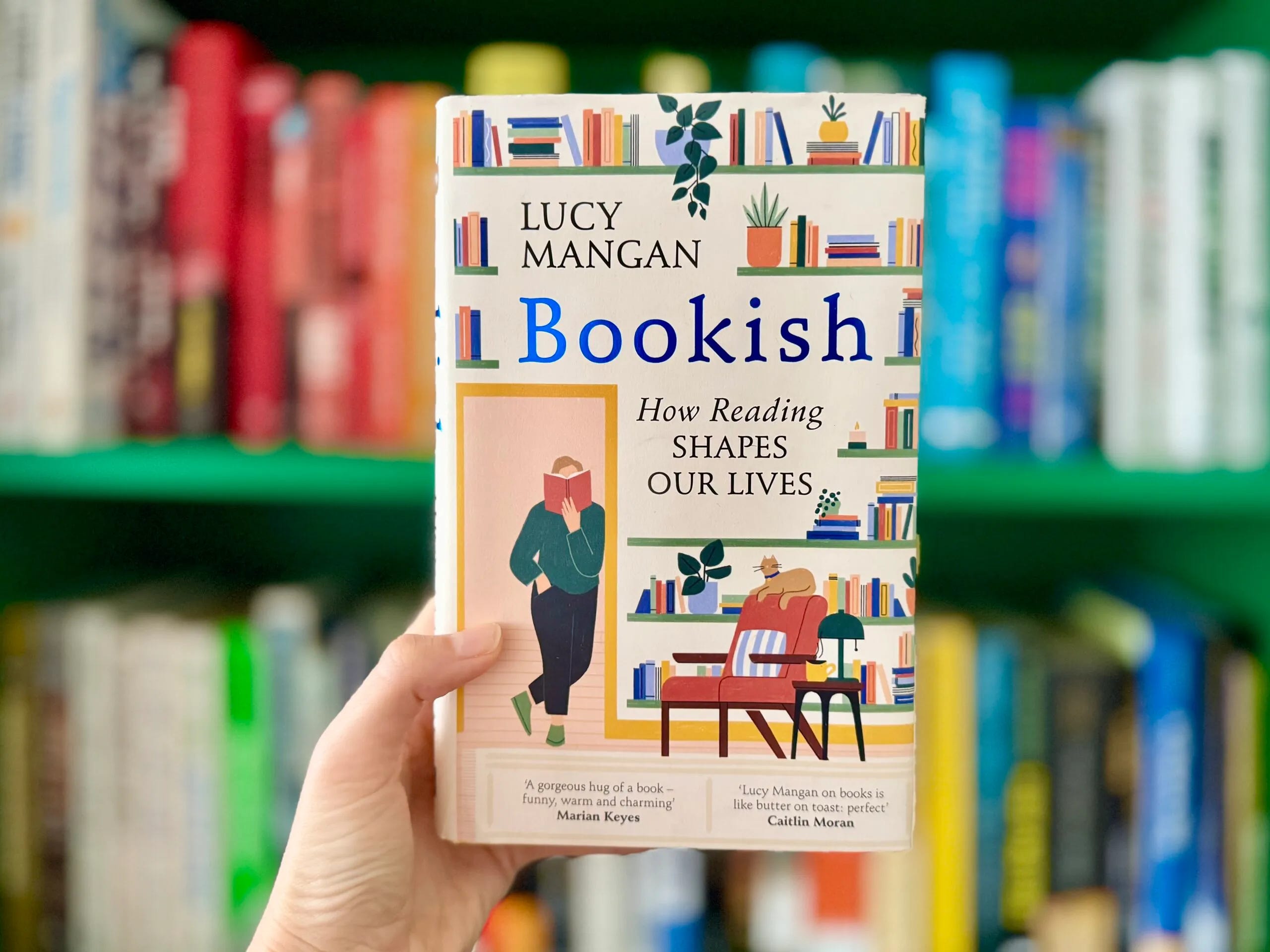
These days more than ever I am turning to people who speak with reverence about the books they have read; about the the ways in which the books that line their shelves have changed them. This feels particularly important to me at a time when the cultural conversation has been flattened by algorithms, and a time when almost no one in my actual life shares my particular appetite for books.
I don’t mean nobody around me reads, but nobody I know reads like I do. My few conversations about books these days almost inevitably end with “But how long is it?” (fiction) or “Does it have sex in it?”, or “Is there a video instead?” (nonfiction). People ask me for book recommendations to help them escape, or build wealth in an impossible economy, or live vicariously; never has anyone asked me for a book recommendation to shape their mind.
Today, as in my adolescence, books (and the Internet) have become the way I find my people. Between book blogs, podcasts, and the occasional YouTube video, I have found people who like books the way I do. But there’s nothing like a book about books.
When I unwrapped Bookish on Christmas Day (I had, of course, requested it), I was particularly excited to fluff up a few cushions and burrow down into the couch with it. While the rest of the family were pouring cocktails and whipping up cheese boards and cracking open board game boxes, I was sinking into my only true comfort.
Immediately, I feel a unique kinship with the author, who draws me in by declaring “I am never happier than when I am in a bookshop,” and other such winks to the bookish reader (“you will know this by the annual accusation that you are taking ‘too many books’ on holiday”).
I enjoyed the structure of Bookish: Mangan is clearly at home with the feature-length article, and each chapter becomes a kind of self-contained essay, with the book adding up to an easy chronological journey through the bigger moments in Mangan’s life and the books that built her inner world along the way.
There is much insight here into Mangan’s own relationship with books, and book lovers will find little to disagree with. What I didn’t get (but had thought I would), was a a broader, perhaps even more scientific analysis in keeping with the title of the book: how, exactly, reading shapes a life. Perhaps this is too much to expect. After all, there are surely few university departments investigating the effect of reading Harry Potter as a child or Nietzsche as a teen.
Still, as a memoir of sorts, this book was interesting enough, even if I did find Mangan exasperating at times, in a way that was not compensated for by beautiful sentences (Mangan is often funny, but is not a particularly lyrical writer).
I did, however, appreciate Mangan’s heroic efforts to house and organise her 10,000-strong book collection (the mind boggles). I do not have 10,000 books, but that same urge to safeguard and categorise is what has led me here, to document my own reading life rather than letting it gush in and, inevitably, flow out. I am slowly beginning to identify with Mangan’s dawning realisation that there is such a thing as too many books (10,000, it appears, is the number), and that what really furnishes a mind is engagement rather than efficiency. There is no luxury like re-reading a favourite book, or of engaging at length with a text (taking notes, writing reviews, talking to friends) rather than devouring them and moving on. “Reading a book, after years apart, is the bibliographic equivalent of never stepping in the same river twice,” says Mangan. Like Mangan, re-reading was something I did constantly in my youth. These days, I re-read only a select few books, and only in times of acute crisis as a comfort mechanism.
Bookish may not make it to my re-read list, but as far as books about books go, it was a fun read.