
When Everyone Knows That Everyone Knows...
A boring book that did not meet the moment

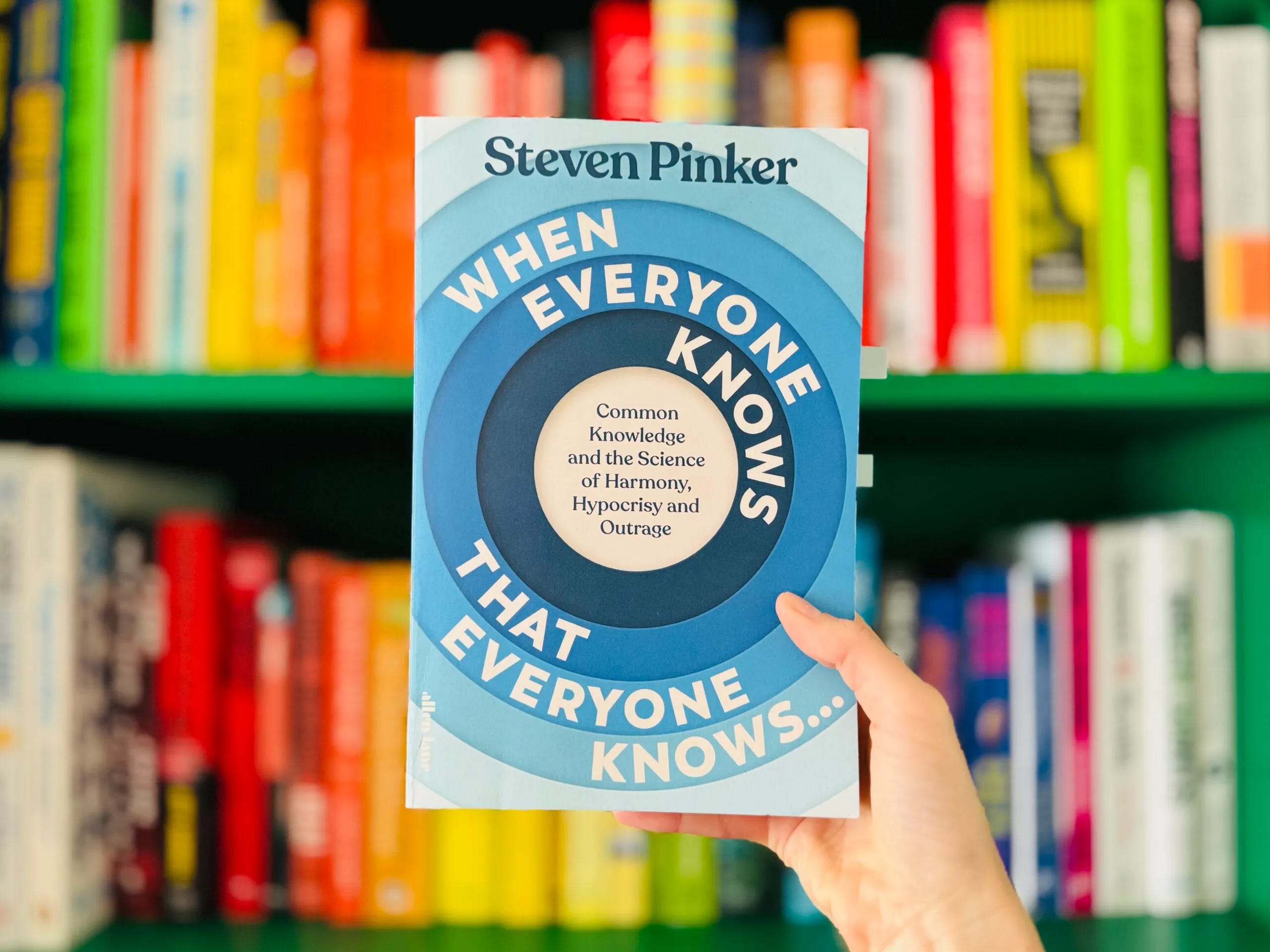
Well well well. Steven Pinker’s Enlightenment Now changed my life several years ago — converted me from pessimist to optimist, gave me the historical context I needed to understand just how miraculous the post-Enlightenment world really is. I read Rationality shortly after, which I devoured, given my love for mental models and metacognition.
I wish I could say the same for this book. In fairness, I only bought this book because Pinker was coming to Brisbane (I’m as shocked as you are) to talk about it. The topic held little interest for me — I could see what the big deal was. I hoped, though, that the book would unfold in such a way that does reveal why this seemingly obscure topic actually matters.
It does not, and I have to conclude that’s because it, ultimately, doesn’t.
The book is about common knowledge — that is, when everyone knows something, and everyone knows that everyone knows it, ad infinitum. Pinker makes the important point that common knowledge is really the foundation for human progress and flourishing, since it enables the kind of large-scale coordination and cooperation that is necessary to advance humanity. But that’s a subject fit for an article, maybe — not a whole book. He brushes over it in the first chapter, and then the reader spends the rest of the book wondering what the point is.
The first half of or more of the book is just Pinker rehashing different variations of the same inane situations in which I know that you know something, and you know that I know that you know it, and I know that you know that I know that you know it…. until your brain explodes. One of these would have been interesting and funny, but I could not count how many times Pinker went over this idea. It was truly excruciating to read, as was his attempt to explain the Friends episode (which Pinker calls an American television situational comedy, as if he had never even encountered a TV before) where the group learns about Monica and Chandler’s secret relationship (which he calls their clandestine affair). Truly painful stuff.
The second part of the book is Pinker taking the opportunity to rail against cancel culture, as if that were the most logical or important follow-on. Though there are a few points where common knowledge provided an interesting lens from which to view cancel culture, on the whole, this feels like a stretch, as if Pinker was looking for some kind of scientific basis from which to launch into his anti-cancel-culture rantings.
I slogged through this book, hoping that the event would be more interesting. Alas, it was not, and Pinker simply repeated the same explanations and examples from the book. The only interesting part came when some audience members asked genuinely insightful questions, and Pinker had characteristically elegant replies.
Unfortunately, it appears the entire audience was just as bored as I was, and stood up to leave before the host had finished his concluding remarks.
Pinker is an interesting independent thinker, but I’m still missing the So what? on this one. As one online review put it (and I’m paraphrasing here): “I love Pinker’s books, but this one needed more time in the oven.”